Used Tesla Model 3 for Sale — Live Nationwide Inventory with Verified HW3/HW4
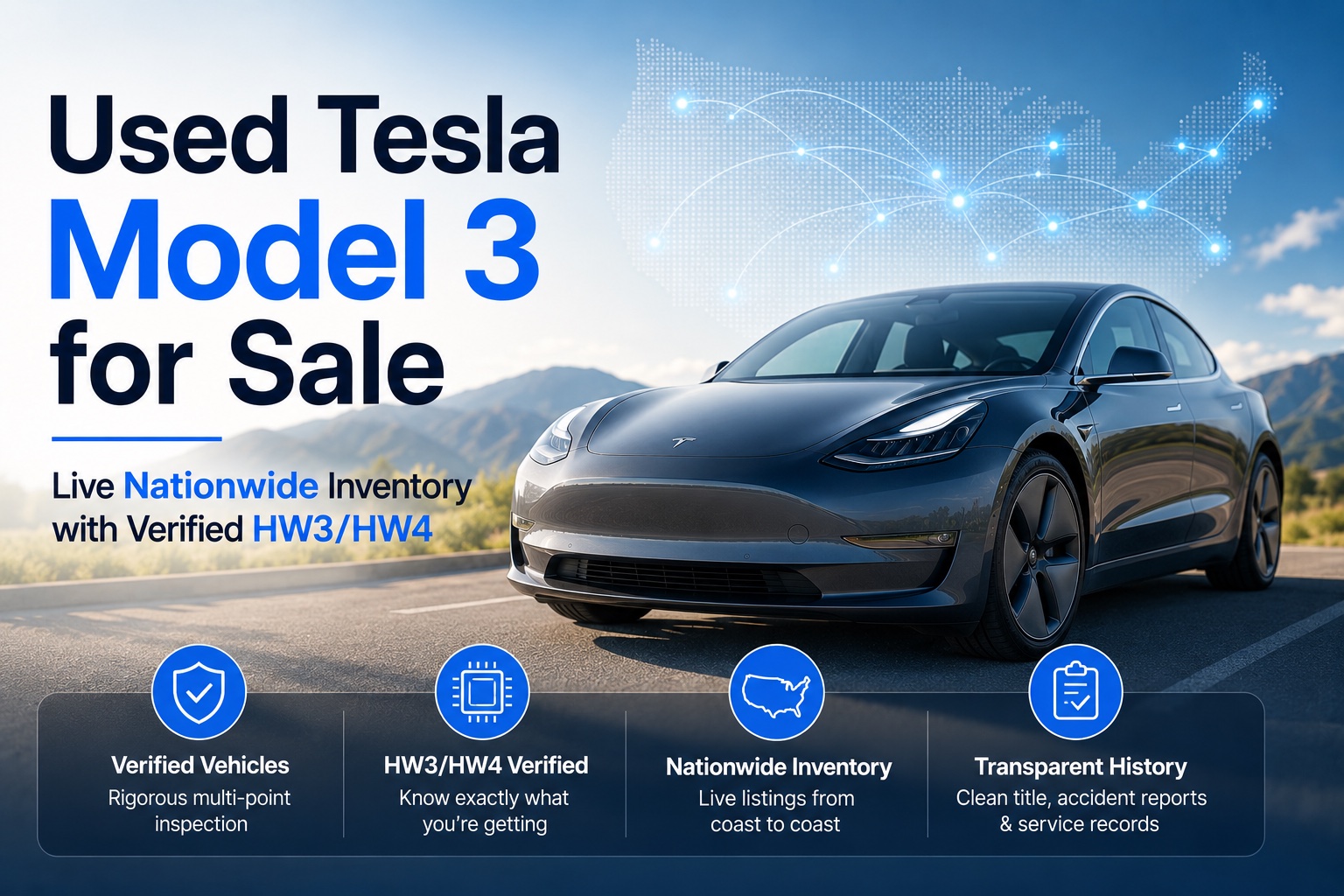
The Model 3 is the best-selling EV in America, and used examples are now some of the best-value electric cars you can buy — the average used Model 3 sells for roughly $30,000, with clean rear-wheel-drive cars routinely under $25k. But before you fall for a listing, one detail decides how the car ages: which Autopilot computer is inside, HW3 or HW4. Tesla's pre-owned listings don't show it. We pull it straight from Tesla's own per-car hardware record — not guessed from the model year. We're an independent search layer over Tesla.com's own used inventory (not affiliated with Tesla): browse every used Model 3 live, see the verified hardware and the true all-in price including delivery, and get an alert the moment your match appears or drops in price.
Find your match, then never miss it.
Browse every used Tesla in the US free, or set a $29 alert and we ping you the moment your car appears or drops in price.
Why the Hardware Version Decides How Your Model 3 Ages
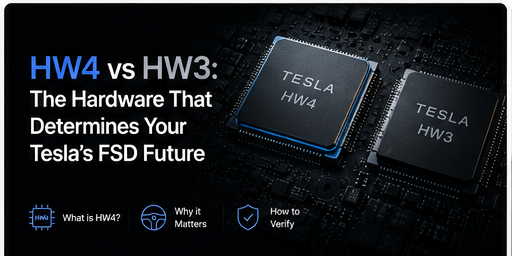
Two Model 3s can look identical — same year, same trim, same mileage — and have very different futures, because Tesla shipped two different Autopilot computers. HW3 (Autopilot Hardware 3) rolled out from spring 2019; HW4 (now branded AI4) reached the Fremont-built Model 3 and Y around mid-2023. Crucially, the changeover wasn't clean — Tesla mixed hardware across the same model years, sometimes within the same month of production. The build date on the window sticker won't tell you which one you've got.
Why it matters: HW4 carries higher-resolution cameras (roughly 5MP vs HW3's ~1.2MP) and far more compute, and it's the platform Tesla is building its next-generation, eventually-unsupervised Full Self-Driving on. HW3 cars cannot reach unsupervised or robotaxi-grade FSD — Tesla has said so directly. (Both computers have 8 cameras, despite a common myth that HW4 adds more; the upgrade is resolution and processing, not camera count.)
This is exactly where most buyers — and most sellers — are flying blind. We read each car's AP_HARDWARE_VERSION straight from Tesla's per-vehicle record and show it on every listing, so the single most consequential spec isn't a guess. Takeaway: never assume hardware from the model year; confirm it.
Model 3 Trims, Range & What Actually Matters Used
Know the trim. Older cars wear Standard Range, Long Range, and Performance badges. The 2024 "Highland" refresh launched as RWD, Long Range AWD, and Performance; in 2026 Tesla relabeled the configurator to Standard and Premium (RWD or AWD) alongside Performance, so you'll see a mix of names in used listings. A RWD car and a Performance AWD car from the same year are different machines and depreciate differently — filter on the exact drivetrain, not just the year.
Range (EPA). The current Model 3 Premium RWD is rated up to 363 miles; the Performance makes 510 hp and hits 60 mph in about 2.9 seconds. Most pre-2023 cars land in the 250–310 mile band depending on battery and trim. One honest caveat the brochures skip: EVs usually fall short of their EPA number on the highway and in cold weather, so treat the rated figure as a best case, not a daily average.
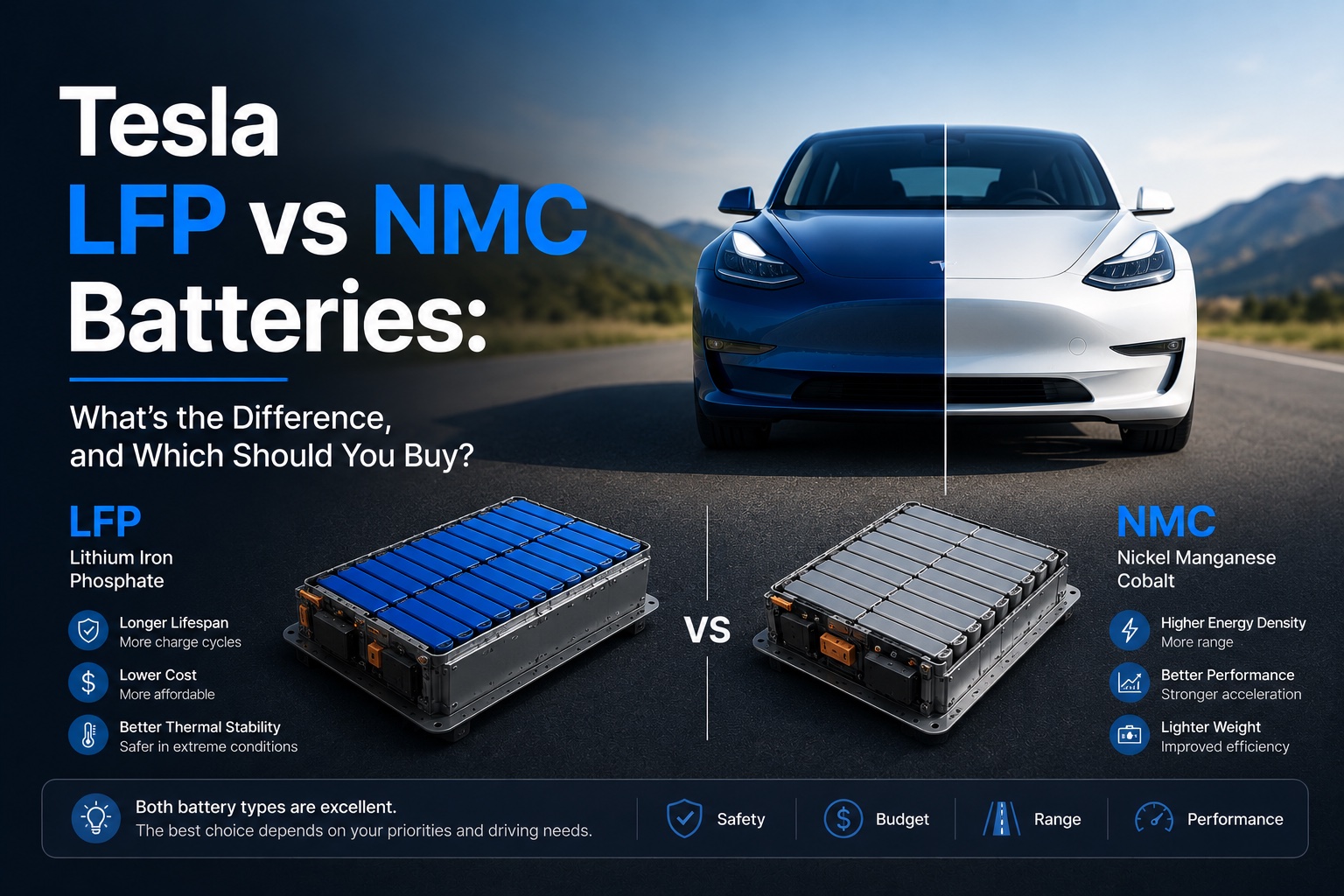
Battery health. Degradation is real but front-loaded and gentle — a healthy pack holds roughly 95% at 50k miles and still ~88–90% near 150k. Tesla's 8-year Battery & Drive Unit warranty transfers with the VIN to you as a later owner (it is not original-owner-only), and it guarantees at least 70% capacity retention. On Model 3, that mileage cap is 120k miles for Long Range/Performance and 100k for base RWD. An out-of-warranty pack runs roughly $13,000–$16,000 to replace — rare, but worth pricing into a high-mileage car.
Days on inventory & history. Clean cars on Tesla.com often move in hours. A listing sitting 20+ days usually has a reason — an odd color, a soft price, or damage history — so we surface days-on-lot to flag outliers. We show clean-title cars only and flag prior accident records right on the card (a documented minor repair isn't a dealbreaker if the price reflects it). Always pull your own Carfax or AutoCheck before you commit. Takeaway: match the trim to your use, mind the warranty mileage caps, and let days-on-lot point you at the bargains and the lemons.
True All-In Price: Sticker Is Not What You Pay
Tesla.com shows a base price, then adds a transport fee that varies by distance — Tesla states roughly $500 to $2,500, with free local pickup if the car is near you. (That fee is non-refundable, and it's separate from the $500 order deposit, which is only refunded if Tesla financing is denied or you switch to a new-car order.) On top of that you still owe taxes, title, and registration. The same listing can be a great deal from one ZIP code and mediocre from another, purely on delivery.
We compute and show the all-in price by ZIP so you see what you'll actually owe before you call. This is where real deals hide: a car that looks mid-pack at sticker can be the best buy on the page once a short delivery is factored in — and a tempting cheap listing can evaporate once true cost is shown. One more line item to plan for: the federal used-EV tax credit ($4,000) ended for cars acquired after September 30, 2025, so there's no federal used-Tesla credit on a 2026 purchase — don't budget around one. Takeaway: compare cars on the all-in number, never the sticker.
HW3 vs HW4: FSD, Resale, and What You're Really Choosing
What an HW3 car does today. Full Autopilot, Navigate on Autopilot, Autopark, and Summon all work and aren't going away. There's also genuine new upside: Tesla has announced a reduced "FSD v14 Lite" build for HW3 — adding Start from Park, reverse and gear shifts, and destination parking — targeted for mid-2026 (real, though timing can slip). What HW3 will never do is reach unsupervised, next-generation FSD or robotaxi capability. If you're content with strong driver-assist and want to spend less, HW3 is a smart buy.
What an HW4 car gets. The full next-generation FSD stack as Tesla rolls it out, on the hardware the company is steering its autonomy roadmap toward. That's the case for optionality and resale upside. Note FSD itself: it's a $99/month subscription (the outright purchase option was discontinued in February 2026), and the computer is soldered to the car — you can't retrofit HW4 into an HW3 vehicle.
The price gap. In practice HW4 cars tend to ask $1,000–$3,000 more than an otherwise-equivalent HW3 car, depending on age and market. If you'll keep the car 5+ years or care at all about future FSD, that premium usually pays for itself in resale alone. We label the verified hardware on every car — see our full HW3 vs HW4 guide for the deeper breakdown. Takeaway: buy HW4 for the long haul or FSD ambitions; buy HW3 to save money on a still-excellent EV — just decide it on facts, not the model year.
Frequently asked questions
How do I know if a specific used Model 3 has HW3 or HW4?
Tesla.com doesn't list it. We read the hardware version straight from Tesla's per-car record (AP_HARDWARE_VERSION) for every listing — not inferred from the model year, which is unreliable because Tesla mixed HW3 and HW4 across the same years. Filter by HW4 to see only cars on the current FSD platform, or browse all and read the verified spec on each card.
Can I add Full Self-Driving to an HW3 Model 3 later?
You can subscribe to FSD on an HW3 car ($99/month) and use today's supervised features, and Tesla has announced an "FSD v14 Lite" build for HW3 — adding Start from Park, reverse, and destination parking — targeted for mid-2026. But HW3 cannot reach unsupervised or robotaxi-grade autonomy, and the computer is soldered in, so you can't retrofit HW4. If unsupervised FSD matters to you, buy an HW4 car.
What's a realistic used Model 3 price right now?
Prices swing with age, mileage, trim, and location. The average used Model 3 is around $30,000; clean RWD cars often list under $25k, and older 2018–2021 examples can dip into the high teens. We show live pricing and flag cars notably above or below market — just compare on the all-in price (with delivery), not the sticker.
Is the battery warranty still good on a used Model 3?
Yes — Tesla's 8-year Battery & Drive Unit warranty transfers with the VIN to you, the next owner. On Model 3 it covers 120,000 miles for Long Range/Performance (100,000 for base RWD) and guarantees at least 70% capacity. Real-world degradation is mild and front-loaded — roughly 95% remaining at 50k miles. We show each car's mileage so you can see how much coverage is left.
Should I buy HW3 or HW4?
If an HW4 car is within ~$2,000 of an equivalent HW3 one, take HW4 — it's the safer long-term bet for resale and future FSD. If you just want a great used EV and don't care about unsupervised driving, HW3 is excellent and cheaper, and it's still getting new features in 2026. We show verified hardware on both so you choose on facts, not fear.
How do I set a price alert for the used Model 3 I want?
Search your exact criteria on UsedTesla.AI — year, color, HW4, price ceiling — then tap 'Set Alert'. You'll get pinged the moment a match lists or an existing car drops in price. Browsing and searching are free; a one-time $29 Search Pass unlocks 60 days of alerts, with a 7-day money-back guarantee.
Ready to find yours? Verified hardware, true all-in pricing, clean-history only.
Browse used Teslas →Keep reading